

The 2026 Landscape
If you're running a dental practice in 2026, there's something you need to hear: the marketing approach that worked five years ago is losing steam. The strategies that filled your chairs in 2019, or even 2023, have either stopped producing results or become so common that they no longer set you apart. Google has changed. Patient behavior has changed. Your competitors have changed. And if your marketing hasn't evolved alongside them, you're probably feeling it already.
The good news? This is fixable. Even well-run practices are finding that what used to work is producing diminishing returns, and that's not a reflection of how good your practice is. It's a reflection of how fast the landscape is moving. The practices that are growing right now aren't just the ones with the biggest budgets. They're the ones deploying them strategically.
So let's walk through what's changed, what matters most, and what you can actually do about it.
Search Has Evolved
This is probably the single biggest shift in dental marketing right now, and most practices haven't fully caught up to it yet. For many informational and treatment-related searches, Google's AI Overviews now appear at the top of results. That means a potential patient researching "how much do dental implants cost" or "what to expect during a root canal" can get a synthesized answer without ever clicking on a single website.
The old approach was straightforward: rank on page one, get clicks, get calls. That still matters, but it's no longer the whole picture. In 2026, your content needs to be structured and authoritative enough to be used as a trusted source by both patients and the AI systems that increasingly shape what they see. That calls for a different kind of content strategy, one built on depth, specificity, and the kind of trust signals that algorithms can verify. This doesn't eliminate the need for rankings, but it changes what "winning" in search actually looks like.
And then there's Google Maps and local SEO. For dental practices, local search results are where the real action is, and the competition for those top three map slots has never been fiercer. Your Google Business Profile isn't just a listing anymore. It's your first impression, your storefront, and often the deciding factor for whether someone calls you or the practice down the street.
Getting this right isn't a weekend project. It takes data, competitive analysis, and a real understanding of how Google evaluates local businesses. Most practices don't have the tools or the bandwidth to do this well on their own, and that's okay. That's what partners are for.
Reputation and Reviews
Here's something worth sitting with: patients are comparing three to five practices before they pick up the phone. They're reading reviews, checking star ratings, and paying close attention to how you respond to negative feedback. If your review profile is thin, outdated, or has unanswered complaints, you may be losing patients before they ever see your waiting room.
Building a strong review profile takes systems, not just good intentions. You need a consistent process for asking satisfied patients to leave reviews, and a thoughtful protocol for responding to every one of them, positive or negative. Nearly 90% of consumers read how businesses respond to reviews. Your response is as much a part of your marketing as any ad you'll ever run.
Content That Converts
Here's a pattern we see all the time: a dental practice has a website. It looks fine. It has pages for each service. And it does almost nothing to set them apart from the hundred other dental websites in their market.
In 2026, "having a website" is table stakes. What separates the practices that show up in search results from the ones that don't is the quality, depth, and strategic thinking behind their content. Every page on your site should be doing a job: answering the questions patients are actually asking, building trust through expertise, and giving Google a clear reason to rank you above your competition.
That means your implant page can't just say "we offer dental implants." It needs to address cost concerns, walk patients through the process, explain what makes your approach different, and provide the kind of detailed information that both patients and search algorithms reward. The same goes for every service you offer.
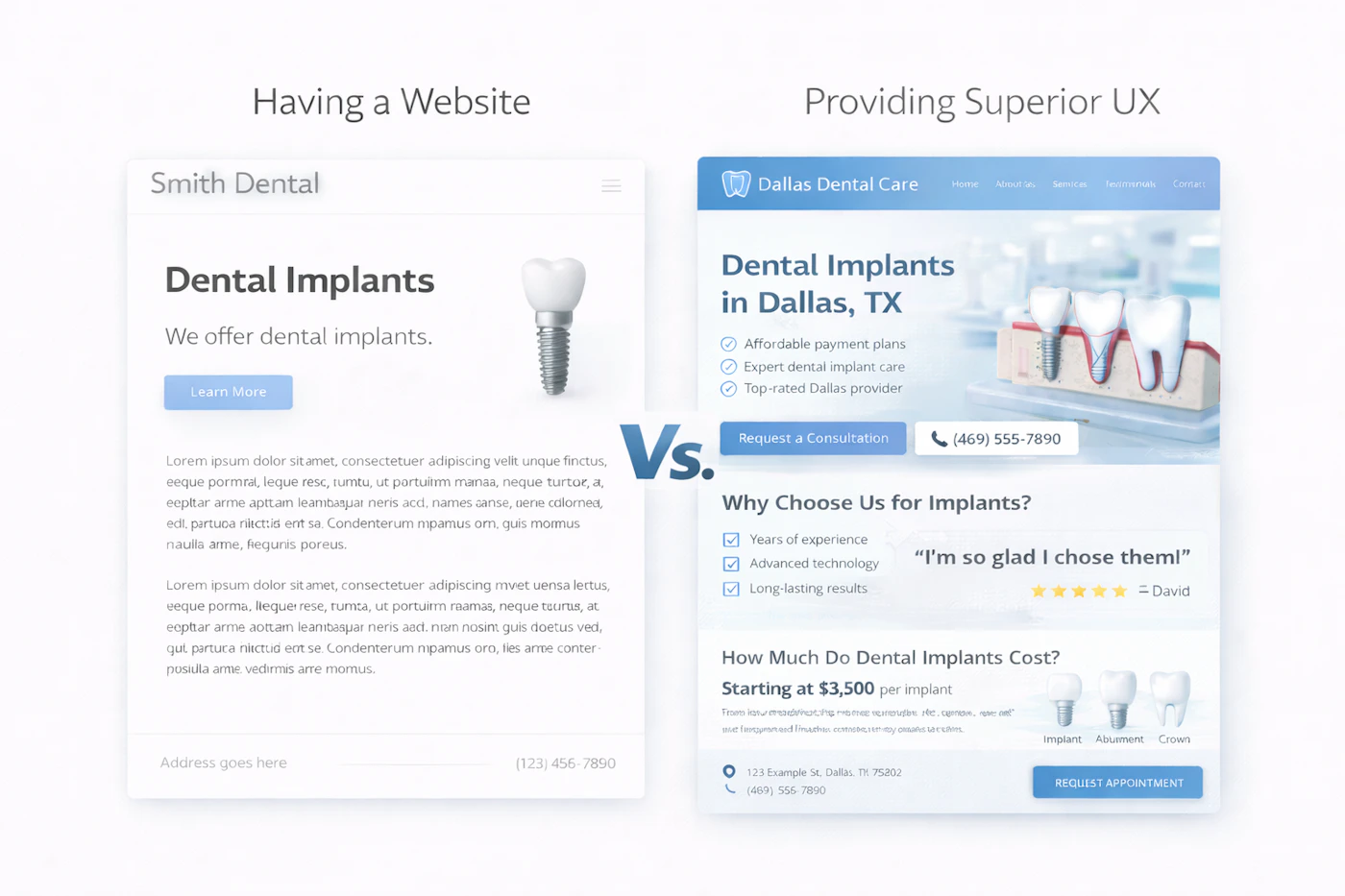
"Having a website" and "providing a superior user experience" are two very different things. Patients can tell the difference, and so can Google.
And it's worth looking at your site experience as a whole. If your website is slow or clunky, you're likely losing people before they ever learn what you offer. Google factors page speed into rankings, and patients factor the overall experience into their trust. A site that feels outdated or frustrating sends the wrong message about your practice.

Google holds dental content to a higher standard because it affects your health and your wallet. That standard is built on three pillars: expertise, authoritativeness, and trustworthiness.
The Multi-Channel Reality
The days of leaning on a single marketing channel are behind us. Patients today encounter your brand across multiple touchpoints before they make a decision. They might find you in a Google search, then notice your social media, then see a Google Ad, then read a review, and then finally call. That journey isn't linear, and it isn't fast.
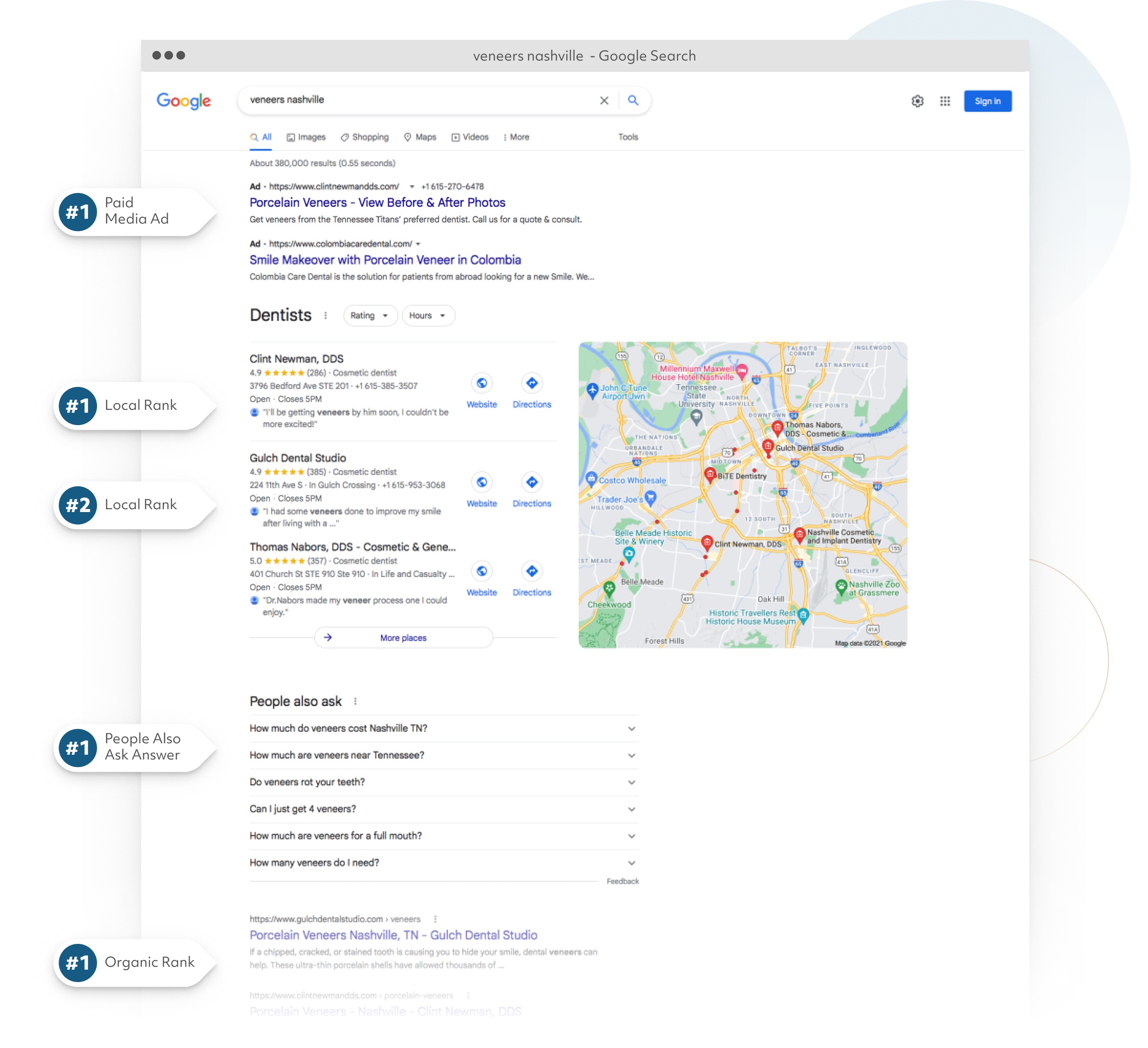
A complete dental marketing strategy in 2026 brings organic SEO, local SEO, paid advertising, content marketing, social media, and reputation management together into a system where every piece supports the others. Your Google Ads should point to pages that are built to convert. Your social media should build trust that reinforces your search visibility. Your reviews should strengthen your local SEO authority.
This kind of coordination doesn't happen by accident. The practices that win aren't everywhere; they're consistent and coordinated. It takes someone who understands how all these pieces fit together, not just in theory, but for your specific market, your specific competition, and your specific goals.
The most successful practices in 2026 aren't trying to figure this out alone. They're working with teams who do this every day, who have the data, the technology, and the experience to build strategies that actually move the needle.
Data Makes the Difference
Here's what we've seen separate practices that are growing from ones that feel stuck: data. Knowing which keywords matter in your market. Knowing what your top competitors are doing and how they're doing it. Knowing which pages are driving calls and which ones are dead weight. Knowing where to put your next marketing dollar for the best return.
Without this information, you're making expensive guesses. And in a competitive market, expensive guesses are how practices fall behind, even good ones.
The technology to gather and analyze this data exists. The question is whether you have access to it and, just as importantly, whether you have someone who knows how to turn it into a strategy that drives real growth.
The Bottom Line
If marketing a dental practice in 2026 were simple, every practice would be thriving. The reality is that it's more complex, more competitive, and more technical than it's ever been. AI is reshaping search. Patient expectations keep rising. And the practices that come out ahead are the ones that take this seriously and invest in doing it right.
Whether your practice is on the Upper East Side or in Western Kansas, the fundamentals are the same: you need a strong technical foundation, content that outperforms your competition, a local presence that Google trusts, and a strategy built on real data. The scale might differ, but the principles don't.
If this sounds like a lot to take on, that's where Einstein comes in. For over 30 years, we've been building the strategies, technology, and products that help dental practices of all sizes and legacies grow. Our proprietary data platform maps your local search landscape down to the keyword, competitor, and conversion level, so we know exactly where your next patient is coming from before we build anything. Our engineering team builds performance-first websites designed to convert search traffic into booked appointments, not just impressions. And our content is built to answer real patient questions, align with how Google evaluates authority, and convert high-intent visitors into scheduled calls.
We don't do cookie-cutter marketing. We build custom-designed systems to help your practice show up where it matters, bring in more qualified leads, and grow your revenue year over year. Think of us as the specialist referral for your marketing.
Schedule a free consultation and see exactly where your practice stands in your market, and what it will take to win.
ID#: 1723886440
Premier Partners are recognized among the top 3% of companies in the Google Premier Partners program.